
What role can future lawyers play in strengthening their communities?
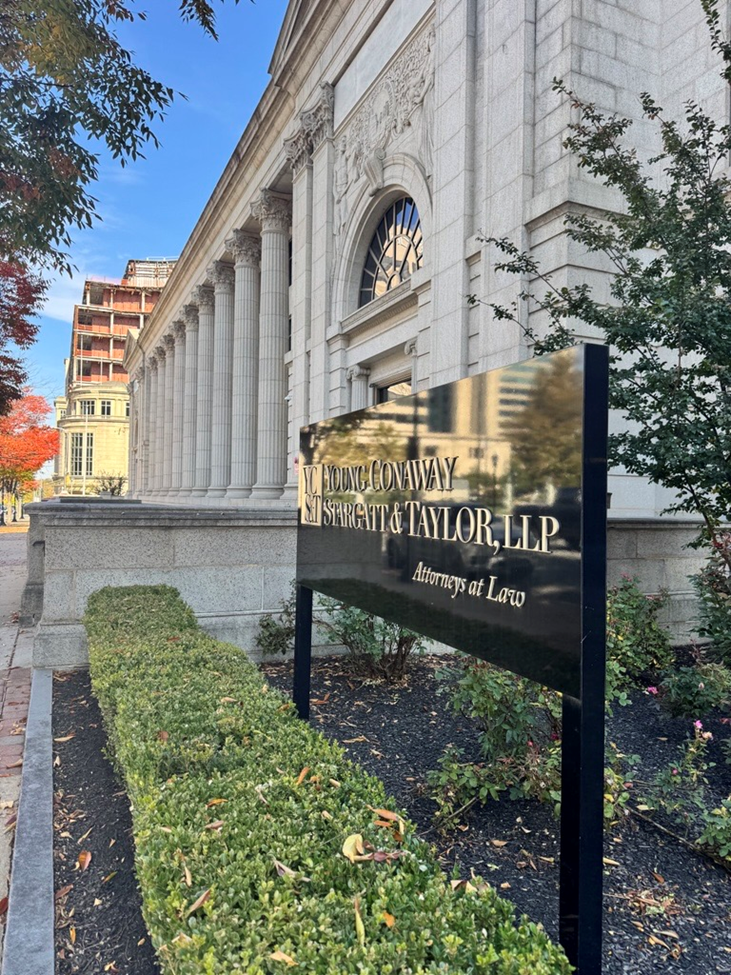
That question brought members of the Widener University Delaware Law School community together with representatives from several area service-oriented organizations for a discussion on volunteerism, mentorship and pro bono service. Hosted by Young Conaway Stargatt & Taylor on Rodney Square in Wilmington and moderated by the firm's pro bono manager and Widener Law alumna, Tania Culley '95, the event connected students with community leaders working to create opportunities for the next generation.
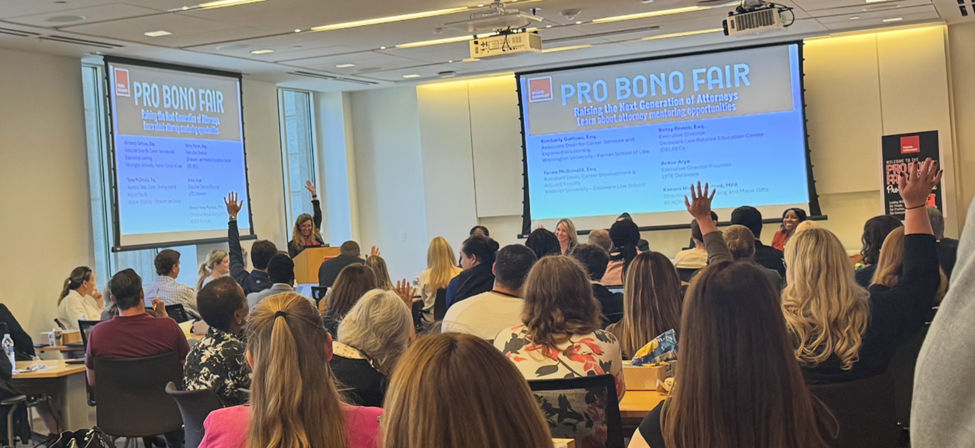
After attendees spent time networking and the panel discussion began, Tanéa McDonald, assistant dean of career development at Delaware Law, posed a simple question:
"How many of you are Delaware Law alumni?"
Hands immediately went up around the room. For the two Delaware Law students in attendance, Gabriel Washel and Khadijatu Jackson, the moment offered a visual reminder of something they would hear throughout the afternoon: in Delaware, the legal community is deeply connected.
Among those raising their hands was Gabrielle D'Andrea '23, a Delaware Law graduate and staff attorney for Legal Services Corporation of Delaware, a nonprofit that provides free civil legal advice, assistance and representation to low-income families and individuals in Delaware.
Also in attendance was Kelly Ensslin, Delaware's Child Advocate and a 2008 graduate of Widener Law. A former social worker who earned her law degree while raising three children, Ensslin now leads Delaware's Office of the Child Advocate, advocating for children and families.
Around them sat fellow alumni serving as mentors, nonprofit leaders and legal professionals.
Lawyers often describe the First State as being closely knit. Alumni, judges, nonprofit leaders and legal professionals routinely cross paths throughout their careers, creating a culture in which giving back is both a professional responsibility and a personal investment in the future of the community. The location of the event underscored that connection, taking place across the street from the building that will house Delaware Law's campus when it moves to downtown Wilmington in 2027.
The move will create new opportunities for students to connect with alumni, build mentoring relationships and engage in pro bono service.
Representatives from REACH Riverside, LYTE, Legal Services Corporation of Delaware and DELREC, or the Delaware Law Related Education Center, described opportunities ranging from mentoring students and supporting educational programs to helping young people explore future careers. Though their missions differ, each organization shared a common message: strong communities depend on people willing to invest their time and expertise in the next generation.
For future lawyers, service provides more than volunteer experience. It creates meaningful connections while offering a firsthand look at the communities they will one day serve as advocates.
"The educational success of young people is the key to lifelong success," said Ankur Arya, founder and executive director of LYTE, or Leading Youth Through Empowerment, which prepares economically disadvantaged youth for success from classroom to career.
That commitment to community resonated with panelist Kanani Hines Munford, a 2025 graduate of Widener University's Master of Public Administration program and director of annual giving and major gifts for REACH Riverside, a neighborhood revitalization and community development initiative. She described Delaware as a place with just "half a degree of separation," where relationships formed through volunteer work and community engagement often become professional relationships years later.
McDonald shared a lesson learned through experience.
"A lot of my job now is from doing something for free 10 years ago and being caught doing something good," she said.
Unlike some states, Delaware does not require aspiring attorneys to complete pro bono hours before admission to the bar. New York, for example, requires applicants to complete 50 hours of qualifying pro bono service before licensure. Yet Delaware Law students continue to seek out volunteer and community service opportunities long before graduation.
"I truly enjoyed attending the pro bono fair at Young Conaway," said Washel. "It was a nice reminder that the law is a people-first industry, where service and compassion remain key."
That message aligns closely with Delaware Law's emphasis on mentorship. The school encourages students to seek guidance from alumni and practicing attorneys while also supporting opportunities for students to mentor those who follow them.
"There is always a person with a question that you have an answer to," McDonald said. "We all have burning questions that may never be answered. But as a mentor, you can give answers."
For the two Delaware Law students in attendance, the discussion served as a reminder that giving back doesn't have to wait until they become attorneys.
"It's never too early to volunteer," McDonald told attendees. "It's never too early to be a mentor."
In Delaware's tightly connected legal community, those roles often begin long before a student becomes a lawyer.